Wish-Graph · Developer early access in development
Indie developers deserve better than Steam's dashboard.
Wish-Graph gives studios real audience intelligence: player attention signals, social sentiment, and content strategy tools built from the people already following your game.
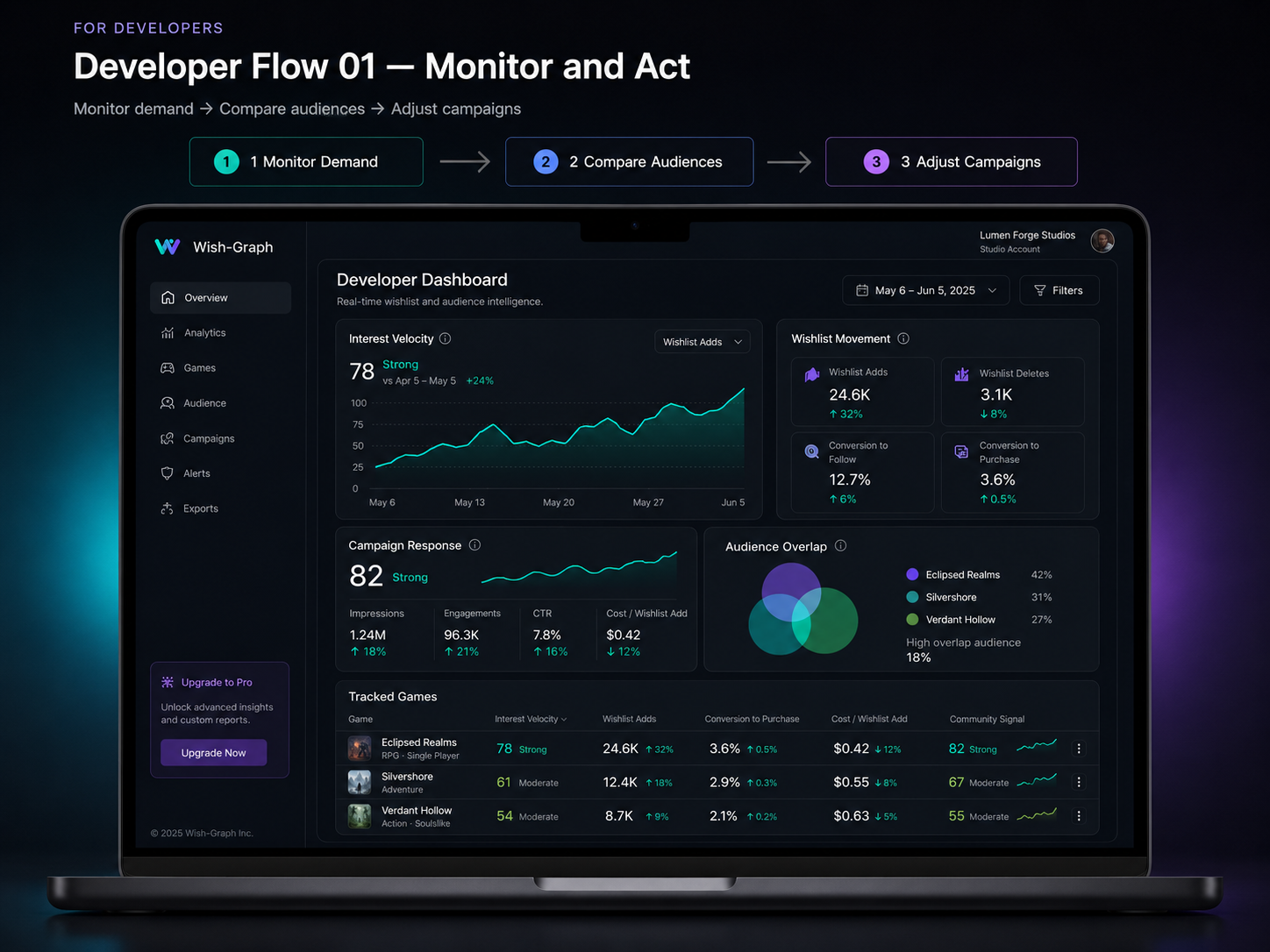
The problem
Steam tells you what happened. Not why.
Wishlist counts, impression rates, and conversion percentages tell you numbers. They do not tell you whether your community is excited or passive, whether your last devlog landed, or what players are saying about your genre this week. Wish-Graph is built to answer the questions Steam leaves unresolved.
Developer intelligence
Intelligence that moves with your game.
Wish-Graph focuses on the signals that matter before launch: behavior, sentiment, and content response. The goal is not another dashboard full of vanity metrics. It is a clearer read on real momentum.
Behavioral Signals
Real player attention data, not impression counts. Track repeat visits, feed engagement, wishlist curation behavior, and recency-weighted interest over time.
Social Sentiment
Wish-Graph aggregates signals from your connected social channels and runs them through sentiment analysis to surface what players are responding to, where friction is building, and which conversations are actually driving interest without you reading every thread.
Content Strategy
Know what is landing. AI-assisted post suggestions are calibrated to your game's specific signal profile: tuned to where engagement is strong, where it is weak, and what your audience has actually responded to. Not generic advice. Grounded in your data.
Player foundation
Players finally have somewhere their full game interest actually lives.
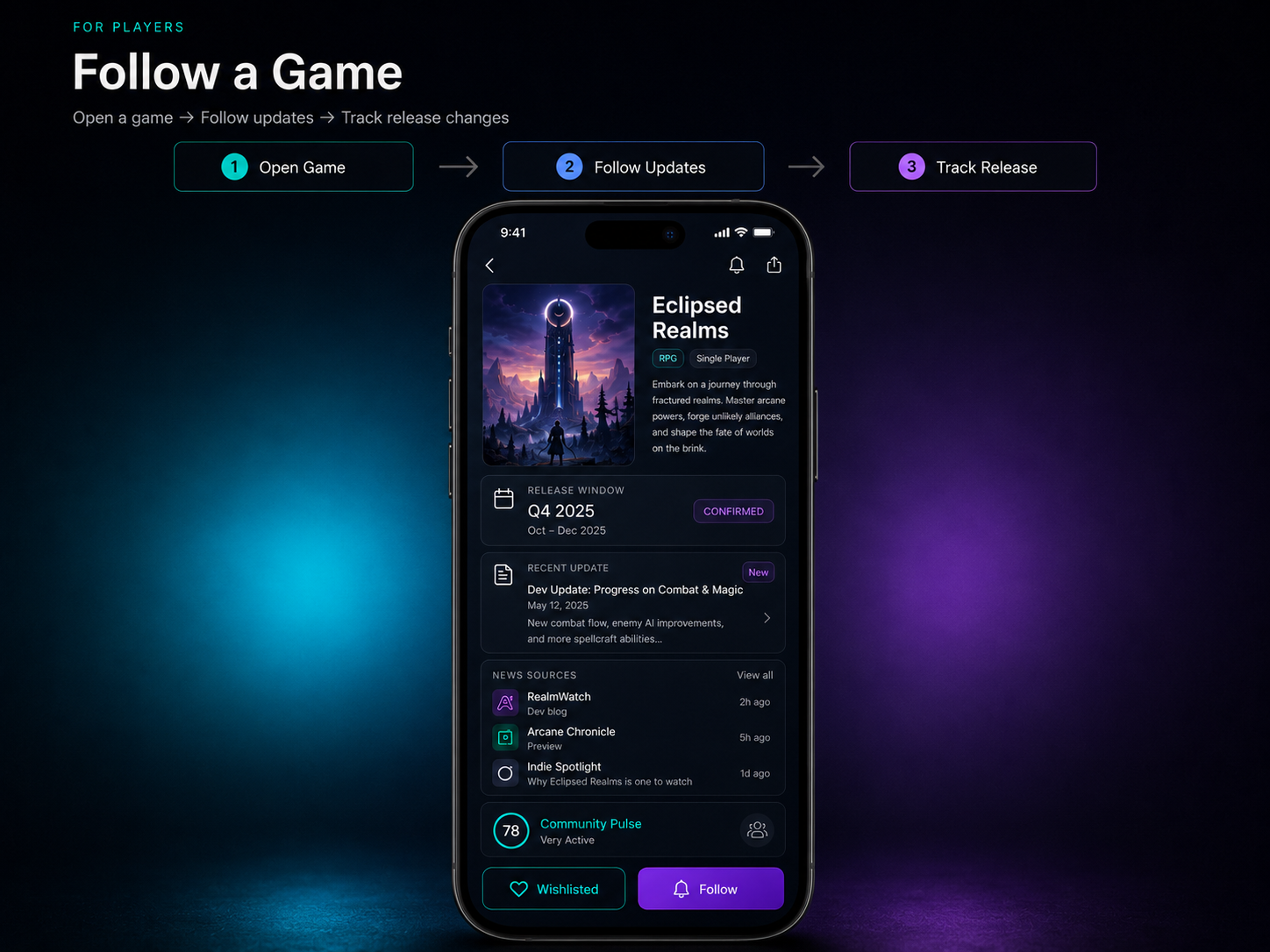
Steam, Itch, and Epic are silos. Players who follow games across all three have no good answer for where to track everything until now. Wish-Graph is a unified wishlist across platforms, paired with a recommendation layer that learns from how players actually engage: what they read, what they revisit, what they follow across sessions. A player who dwells on roguelike coverage and saves narrative-heavy games is not just a genre tag. Wish-Graph treats them accordingly.
No ads. No dark patterns. Players use it because it genuinely serves them, and authentic engagement produces better signal than any incentivized alternative.
Developer enablement
Built for developers at every stage.
New to the indie scene or launching your tenth game, the developer portal adapts to where you are. Contextual guides, community resources, and platform recommendations surface based on your stage, so early access gives you something useful before your own data has had time to build.
Intelligence layer
We built this because the alternative is not good enough.
Most analytics tools count events. Wish-Graph is trying to interpret intent. Strong signals like repeat visits, explicit saves, cross-session engagement, and content response should matter more than impressive-looking dashboards with weak definitions.
Behavioral signals
Track believable momentum.
The dashboard should surface attention shifts, return visits, and movement across key player actions instead of flattening everything into one growth chart.
Player foundation
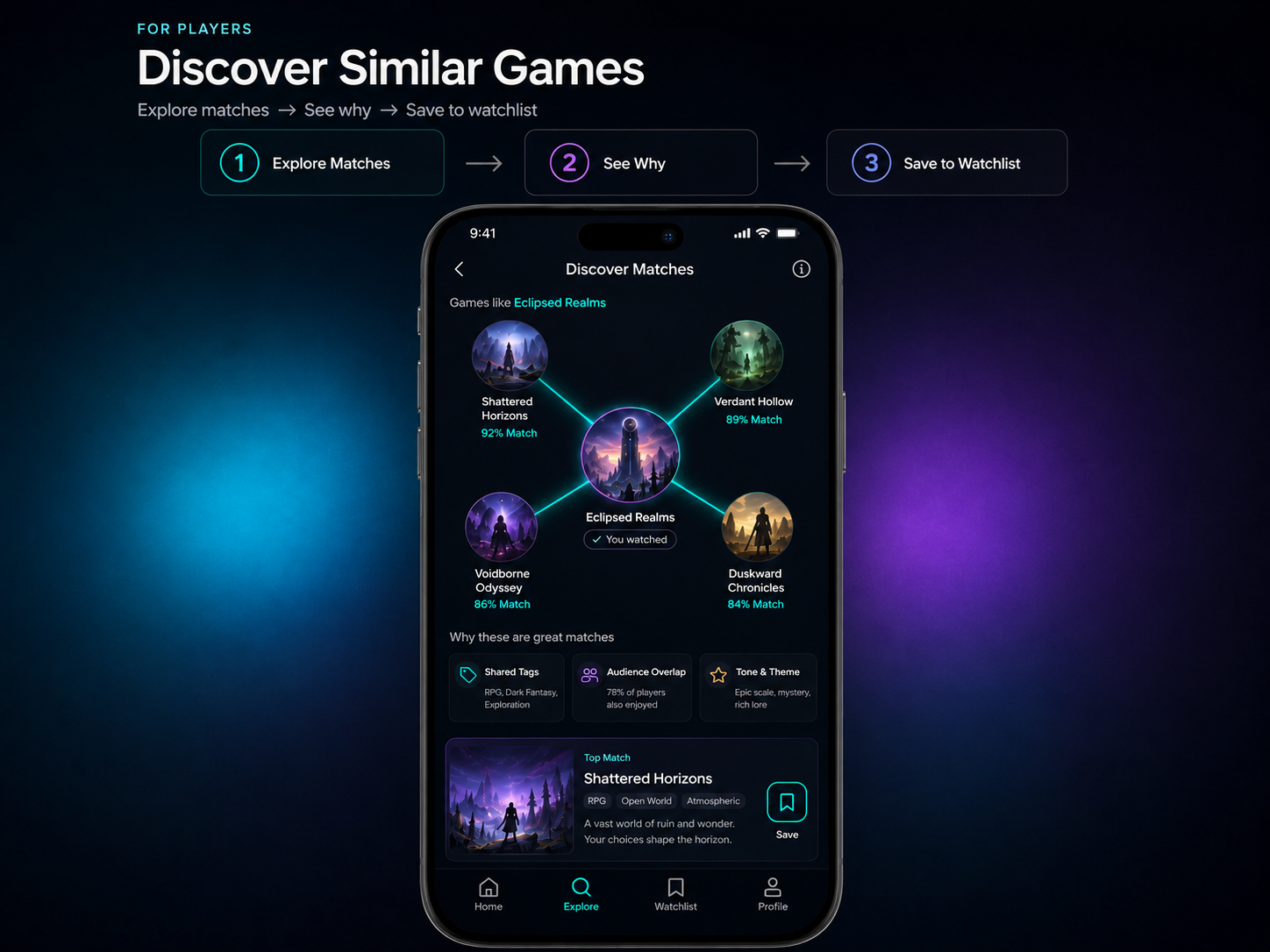
See where attention actually clusters.
Discovery stays grounded in real interest patterns so the product learns from what players follow, revisit, and compare rather than from inflated feed mechanics.
Content response
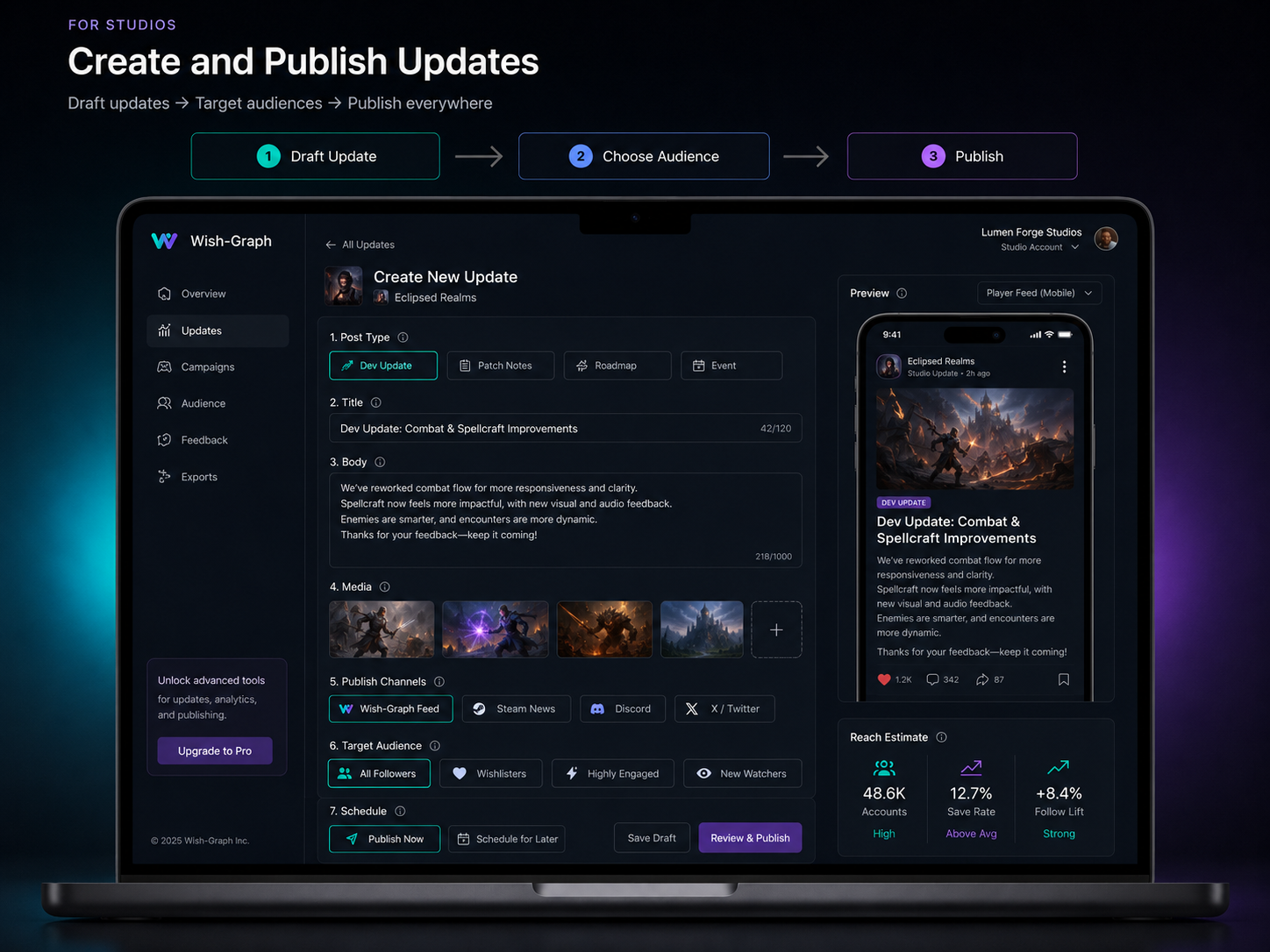
Know what landed and what disappeared.
Studio update workflows can stay connected to downstream signal shifts, making it easier to judge whether a post clarified the pitch or simply added more noise.
Philosophy
A smaller number of focused metrics is more valuable than broad strokes.
Platform scope
Starting with Steam. Expanding with purpose.
Steam-connected wishlist flows are the foundation. Itch.io integration is in scope, reflecting where a significant share of indie game activity actually lives. Epic Games support is planned as access allows. Additional social integrations and data partnerships will follow player behavior, not marketing slide order.
FAQ
A few clear answers.
What is Wish-Graph?
Wish-Graph is an audience intelligence platform for indie game developers. It combines real player attention signals, social sentiment analysis, and AI-assisted content tools to show studios who is following their game and what they care about before launch.
How is this different from Steam analytics?
Steam tells you what happened in aggregate numbers. Wish-Graph is designed to explain why through behavioral signals, social sentiment from connected channels, and recency-weighted attention patterns that reflect current interest.
Who is Wish-Graph for?
Primarily indie developers and small studios that need audience insight without a marketing department. Publishers and larger studios are a future audience, but the first product is being shaped around indie needs.
Is it available now?
Developer early access is still in development. Teams joining now are helping shape what signals matter, what the dashboard surfaces, and how the intelligence layer should evolve.
What data does it use?
Wish-Graph uses player behavioral signals from within the platform and social data from channels developers explicitly connect. Analytics are aggregate, thresholded, and privacy-reviewed rather than exposing user-level data.
Early access
Shape the analytics product, not just the app.
Developer early access is a design conversation, not a passive beta signup. Studios joining now help define what signals matter, what the dashboard should surface, and how the intelligence layer needs to behave before launch pressure peaks.